Domain Hijacking: How It Happens and 7 Ways to Lock Down Your Assets
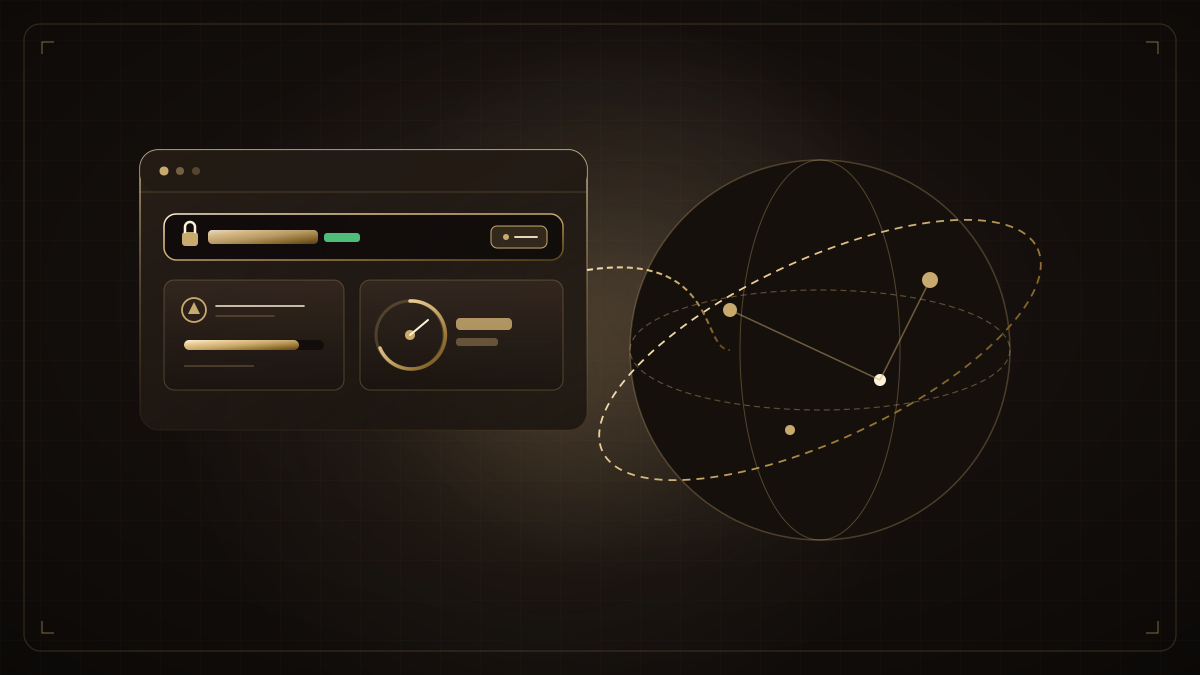
Domain hijacking occurs when an unauthorized entity gains control of your domain registration, redirecting all website traffic and corporate email to malicious servers.
1. Common Hijacking Attack Vectors
- Administrative Email Compromise: Attackers breach the email associated with your registrar account and trigger password resets.
- Social Engineering Registrar Support: Impersonating domain owners through fake documentation or unverified phone support calls.
- Expired WHOIS Email Drop: If the registrant email expires, an attacker can register that email domain and take over the account.
2. Seven Rules for Impenetrable Domain Security
- Enforce Hardware Security Keys (YubiKey) or Authenticator 2FA on your registrar account.
- Enable Registry Lock / Transfer Lock at the highest tier available.
- Use a dedicated corporate email for registrations, never personal webmail.
- Enable DNSSEC (Domain Name System Security Extensions) to prevent DNS spoofing.
- Set up auto-renewal with multi-year registrations.
- Enable WHOIS Privacy Shielding.
- Monitor your nameserver records regularly for unexpected modifications.
Kapil Wadhwa
AuthorLead Market Research & Brand Intelligence Strategist
Specializing in commercial market research, consumer brand perception, digital intelligence, and enterprise competitive positioning.
Looking to instantly register a domain or deploy retail hosting?
Check real-time domain availability, instant INR pricing, and immediate cart checkout on our automated SuperSite infrastructure.
Need architecture direction for your brand?
Connect directly with Vipin Wadhwa, Kapil Wadhwa, and our team to review your technical brief within 24 hours.
Related Insights in Domain Names
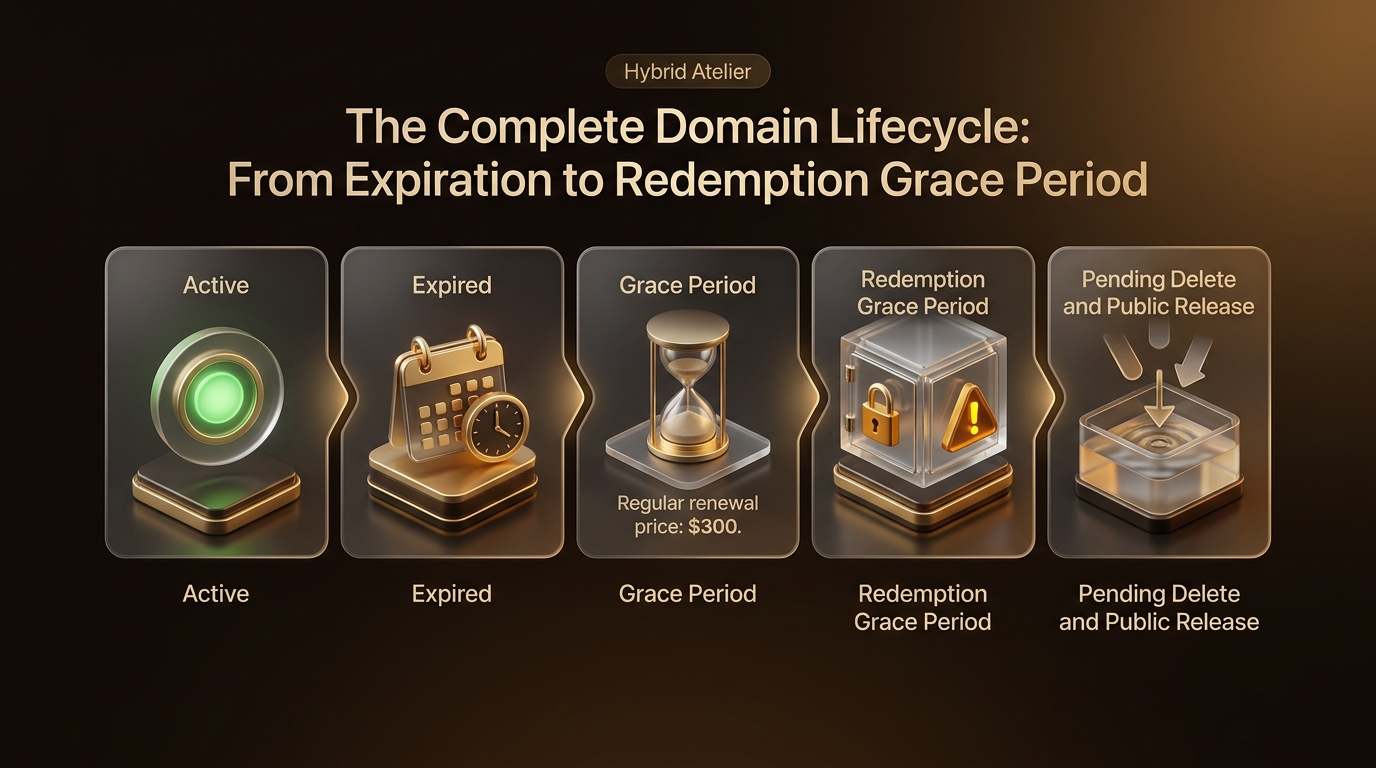
Domain Name Lifecycle: Active, Expiry, Grace & Redemption Periods Explained
Detailed timeline of domain expiration phases, registrar hold stages, and redemption grace periods.
How to Appraise and Sell Unused Domain Names for Maximum Value
Maximize the recovery value of surplus domain assets through proper marketplace listings, landing pages, and escrow protocols.
Defensive Domain Registration: Protecting Your Trademark and Brand Identity
Strategic frameworks for securing brand variations, misspellings, and international extensions to stop typosquatting.