Domain Name Lifecycle: Active, Expiry, Grace & Redemption Periods Explained
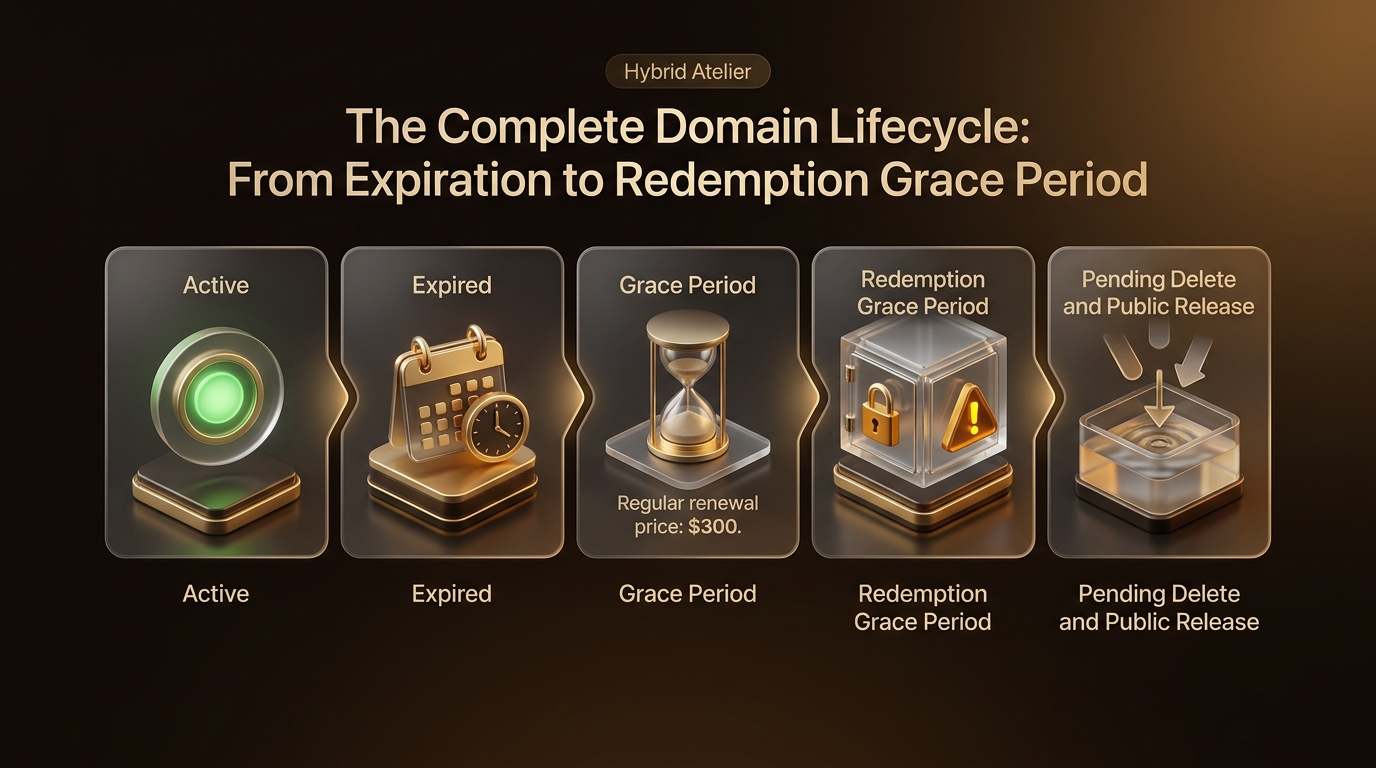
When a domain registration lapses, it does not become instantly available for public re-registration. It traverses a strictly governed ICANN lifecycle.
Stage 1: Active Registration (Years 1–10)
Your domain operates normally with live DNS, routing web traffic and handling corporate emails.
Stage 2: Auto-Renew Grace Period (Days 1–30 Post-Expiry)
DNS records are deactivated, stopping website and email service. However, the original registrant can renew the domain at standard registration pricing without penalty.
Stage 3: Redemption Grace Period (Days 31–60 Post-Expiry)
The domain is slated for registry deletion. The owner can still recover it, but registry operators charge an additional 'Redemption Fee' (often ₹6,000–₹12,000+) on top of renewal fees.
Stage 4: Pending Delete & Public Drop (Days 61–75)
The domain is locked and released to public drop-catch services and public registration.
Vipin Wadhwa
AuthorFounder & Lead Domain Strategist
Advising enterprise founders and scaling brands on high-value domain acquisitions, brand prestige, and digital authority.
Looking to instantly register a domain or deploy retail hosting?
Check real-time domain availability, instant INR pricing, and immediate cart checkout on our automated SuperSite infrastructure.
Need architecture direction for your brand?
Connect directly with Vipin Wadhwa, Kapil Wadhwa, and our team to review your technical brief within 24 hours.
Related Insights in Domain Names

How to Appraise and Sell Unused Domain Names for Maximum Value
Maximize the recovery value of surplus domain assets through proper marketplace listings, landing pages, and escrow protocols.
Defensive Domain Registration: Protecting Your Trademark and Brand Identity
Strategic frameworks for securing brand variations, misspellings, and international extensions to stop typosquatting.

.tech, .store, .agency: Are New gTLDs as Good as .com for Google Ranking?
Detailed analysis of Google search indexing parity for modern specialized domain extensions like .tech, .design, and .store.